
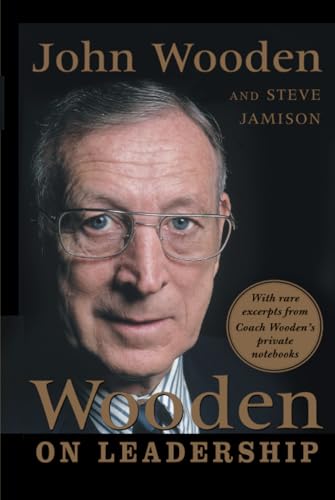
I was glad to pick up this book and read it because I’d heard tons of John Wooden quotes over the years. One of my favorite coaches to substitute teach for back in the day had them all over his classroom wall and I thought they were fantastic for reminding students what needed to be done (hope it was successful).
I’d been looking through my collection of business and leadership books for ones to read for weeks, because I have trouble being a manager at my job (instructing people on what needs to be done when you don’t have the “I’m gonna tell your parents” hanging over their heads is kinda hard to do, and I end up doing things myself because I’m not taken seriously). I know I’ve made mistakes in my job because I can’t quite find that balance between being a person they can respect who will do the job, too, versus some hard-ass people despise.
Well, small tweaks may well be the key to getting the best out of folks around you, and I love the presentation in this book. Wooden on Leadership has a lot of the principles that guided Wooden throughout his career, things he learned along the way, and his famous pyramid of success broken down so we can understand what comprised it and how it was made in the first place.
All the things he learned over the years helped he and his UCLA Bruins team win championship after championship for decades, so he has a lot of wisdom to impart.
Wooden is not an inflexible person and if there’s anything that you can take from this book, it’s that if something doesn’t work, discard it. Change it. Make it work for you. That’s probably the biggest lesson he has imparted in these pages. In his early career he had some inflexible rules, but over time and with differing circumstances, he learned to adjust them and expectations of his players, his staff, and himself.
That’s something that needs to be acknowledged in leadership and management. So often we hear of people who have implemented policies and act as if they’re chiseled into stone, even if by day 2 it’s clear they won’t work out as advertised. Finding that strength to take criticism or suggestions and implementing them (or trying to) is much better than doubling-down on things that don’t work.
Wooden on Leadership is not a dry read and feels more like a conversation with a wiser elder. There are plenty of pages dedicated to players and staff he worked with who gave their own stories of working with Coach Wooden, too (including Kareem Abdul-Jabbar), and each chapter has brief summations of the lessons Wooden wished to impart.
This is definitely a worthy book to have. If you struggle with interpersonal communication or want to create more of a team feel in your organization–sports or otherwise–then this is for you. I’m keeping this on my shelf and going to look for more Wooden books, because I love his way of breaking things down.


The Floor is Yours…